Area Monitoring
What is Area Monitoring
The abundance of open and commercial multi-spectral and multi-temporal Earth Observation data provides a unique opportunity to monitor agricultural activities on a large scale. The initial use case is focused on the European Common Agricultural Policy, due to efficient control of subsidies, but the options are plentiful and related to sustainable farming.
Demo
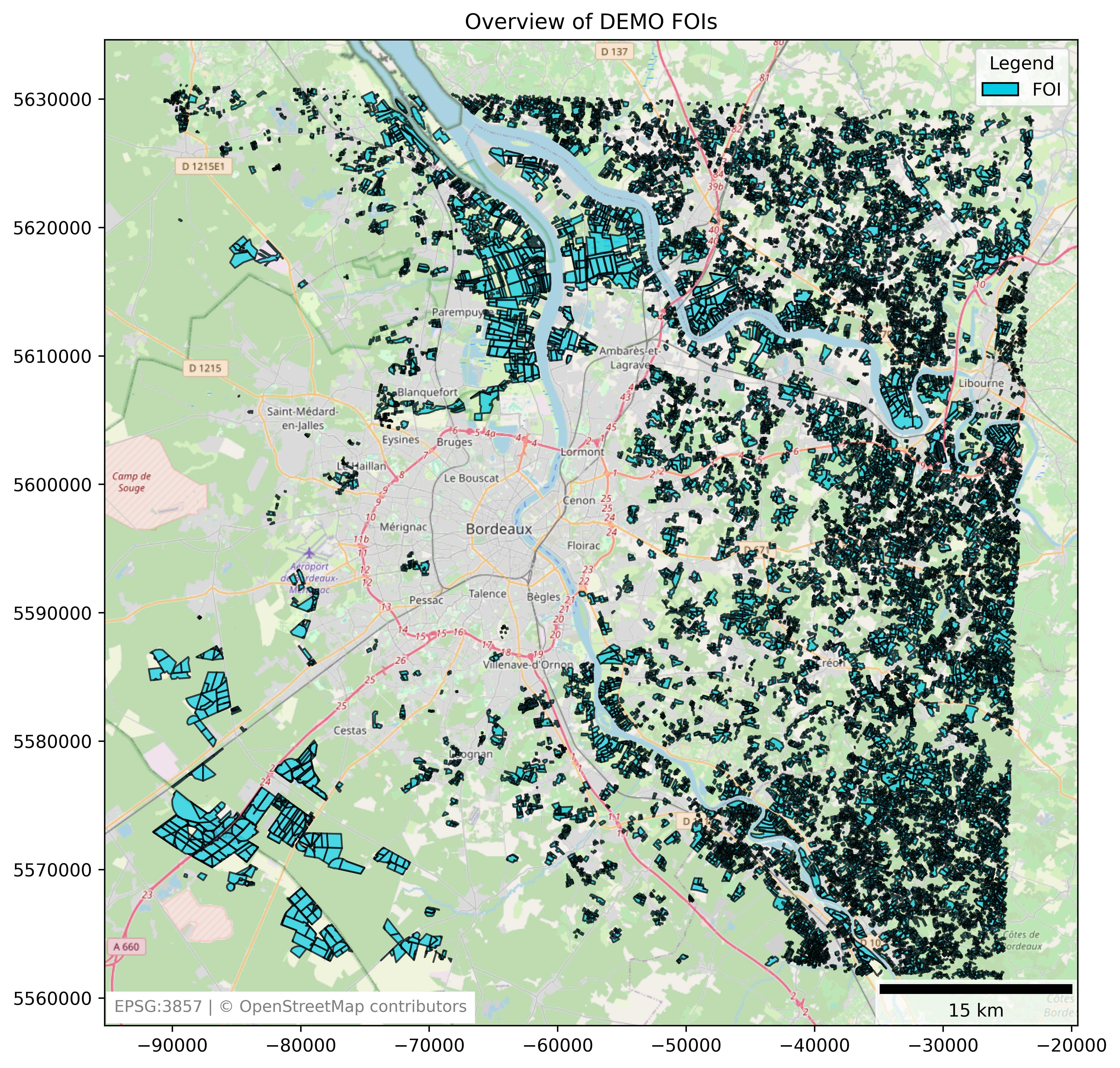
For learning and demonstration purposes, we have generated signals and markers for 20,280 agricultural parcels, which are displayed in the Area Monitoring app as part of the DEMO_FR23 scope. The selected area is near Bordeaux, and is also available as Planet Sandbox Data.
Reference data produced by the Agence de Services et de Paiement (ASP) is part of the Registre Parcellaire Graphique (RPG), a French geographic database providing detailed information on agricultural parcels. This data is used to process agricultural aid applications under the Common Agricultural Policy (CAP) in France. The publicly available RPG data includes:
- Geographic information on agricultural parcels, which are the basic units of land declared by farmers.
- Main crop types associated with each parcel.
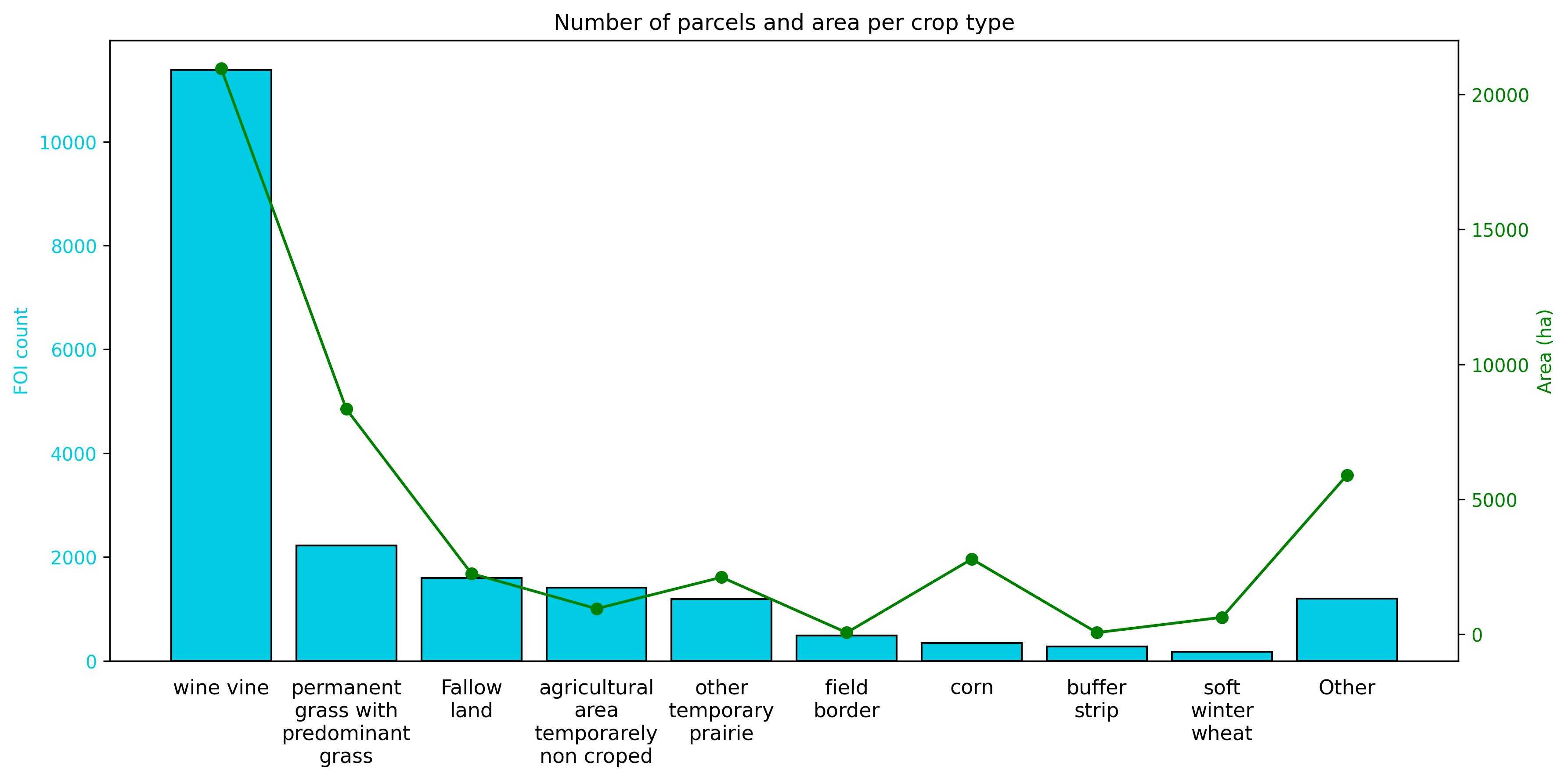
The reference data consists mainly of vineyards and permanent grasslands. Below you can see the distribution of the most common crops.
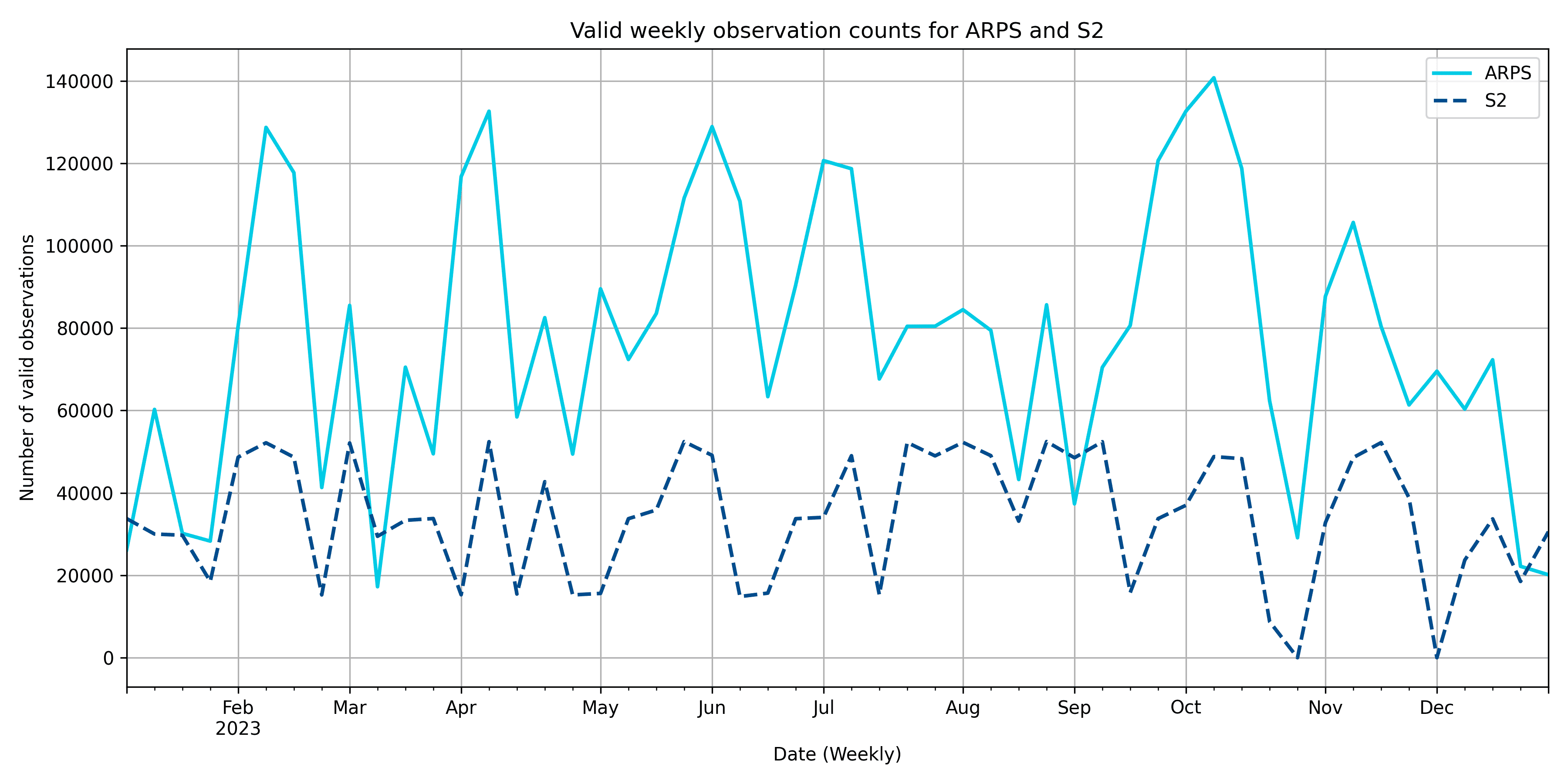
Signals were downloaded from two sources: Sentinel-2 (S2) and Analysis Ready PlanetScope (ARPS) for 2023. Sentinel-2 provides freely available 10m resolution multispectral imagery, while ARPS offers ready-to-use data from PlanetScope satellites, enabling efficient and comprehensive monitoring of agricultural parcels with 3m resolution. Compared to S2, ARPS—with its lower revisit time—produced more valid observations (i.e., observations that are cloudless and not outliers), as shown in the image below. This difference was especially noticeable during the cloudy autumn months.
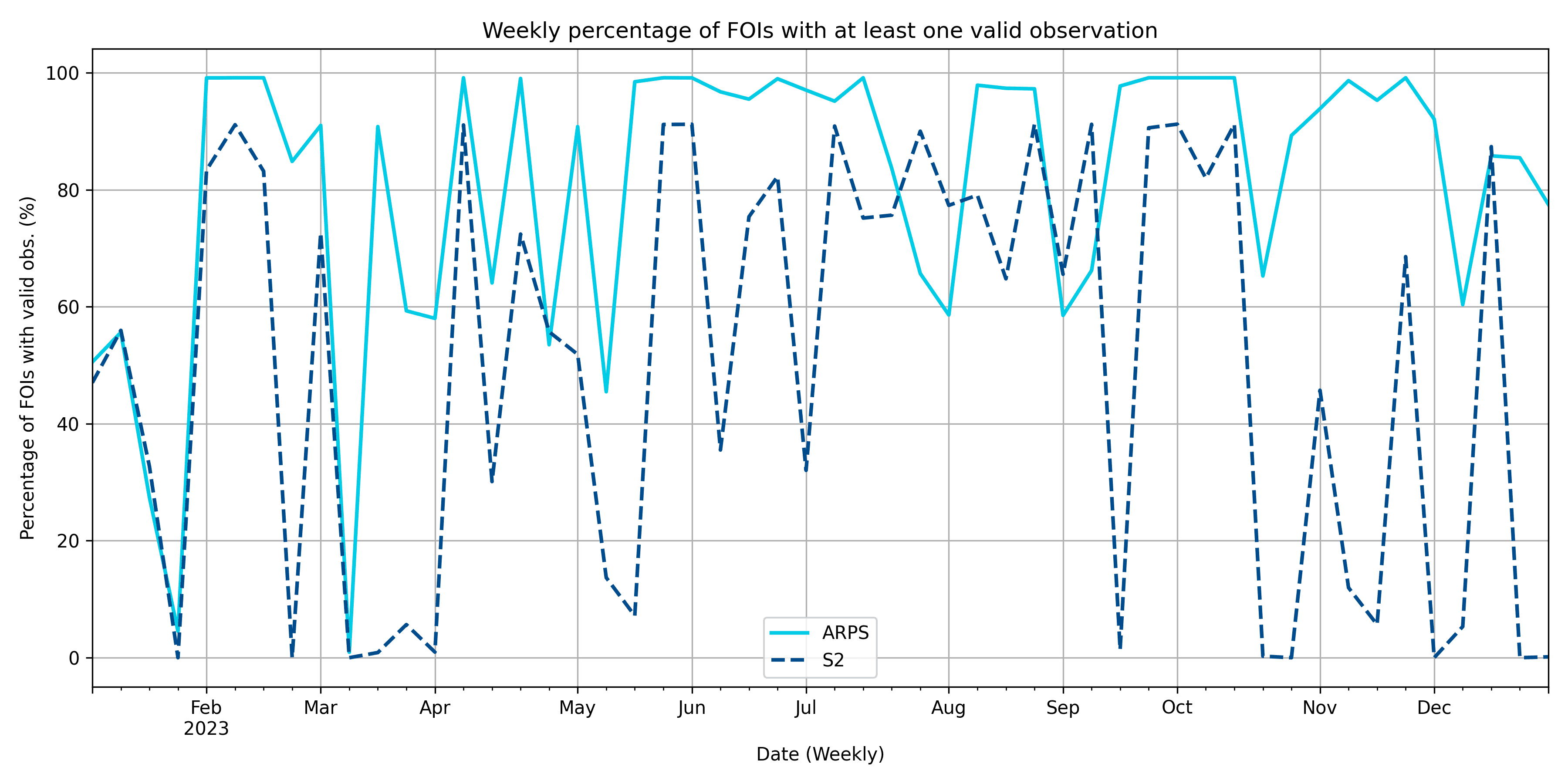
In general, this difference can result in missed events or observations. The overview below for 2023 shows the percentage of FOIs that had at least one valid observation. With ARPS, there were only two weeks—one in January and one in March—when no valid observations were available due to clouds, compared to nine such weeks with Sentinel-2.