Greening and Harvest Marker Examples
Bare soil between harvest of the main crop and second crop
Description
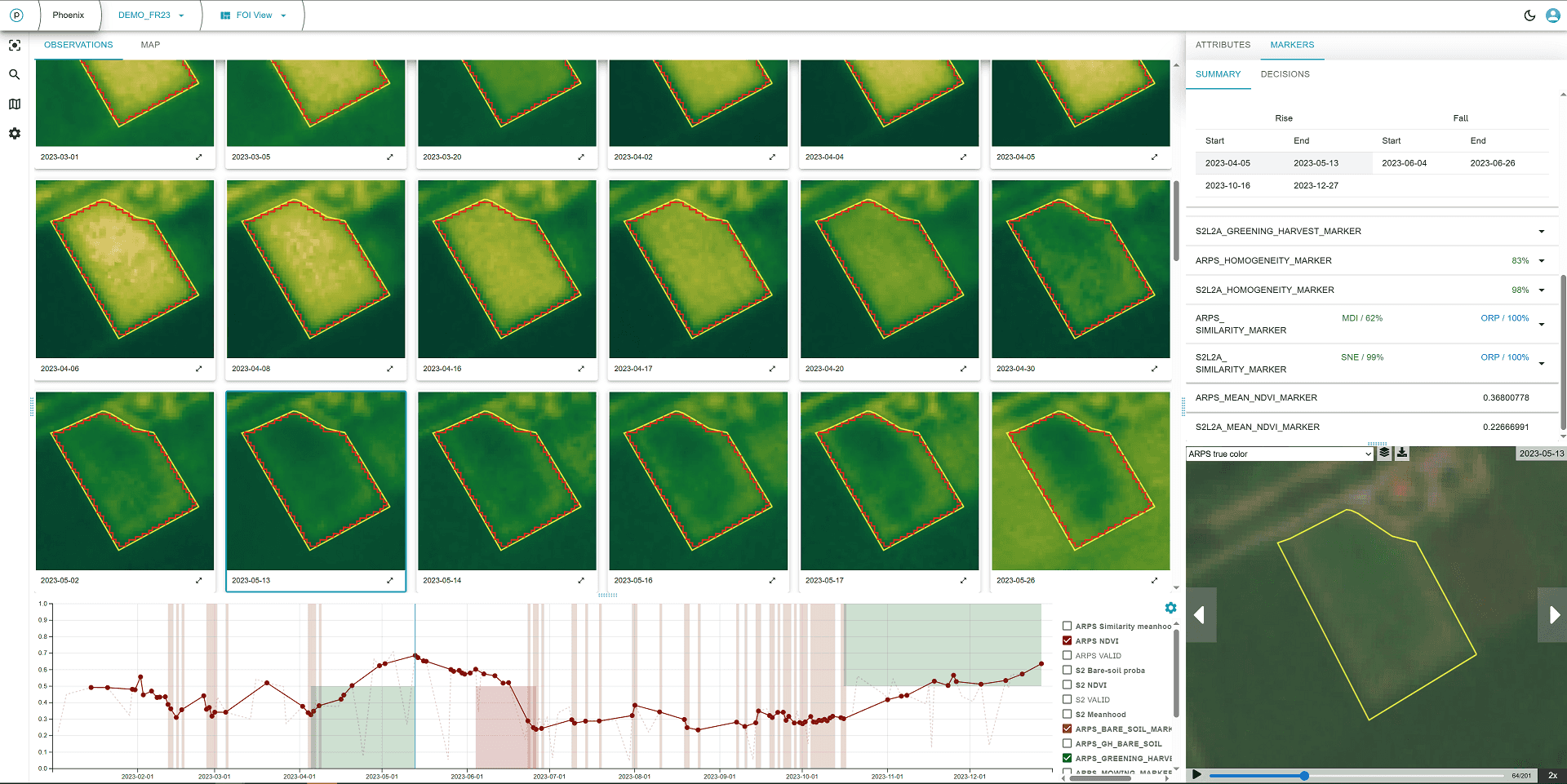
FOI = 92274649 had a spring barley (Hordeum vulgare L.) claim for the main crop. This NDVI time series indicates development of the main crop early in spring and harvest in mid-summer (see Area Monitoring App screenshot below).
Key observations:
- Greening phase detected early in spring
- Harvest detected in mid-summer as expected for spring barley
- Bare soil detected after harvest (marked with vertical brown lines in Signal component)
- Bare soil indicates agricultural practices that removed vegetation and exposed soil, such as ploughing
Link
Continuous vegetation cover indicating undersown second crop
Description
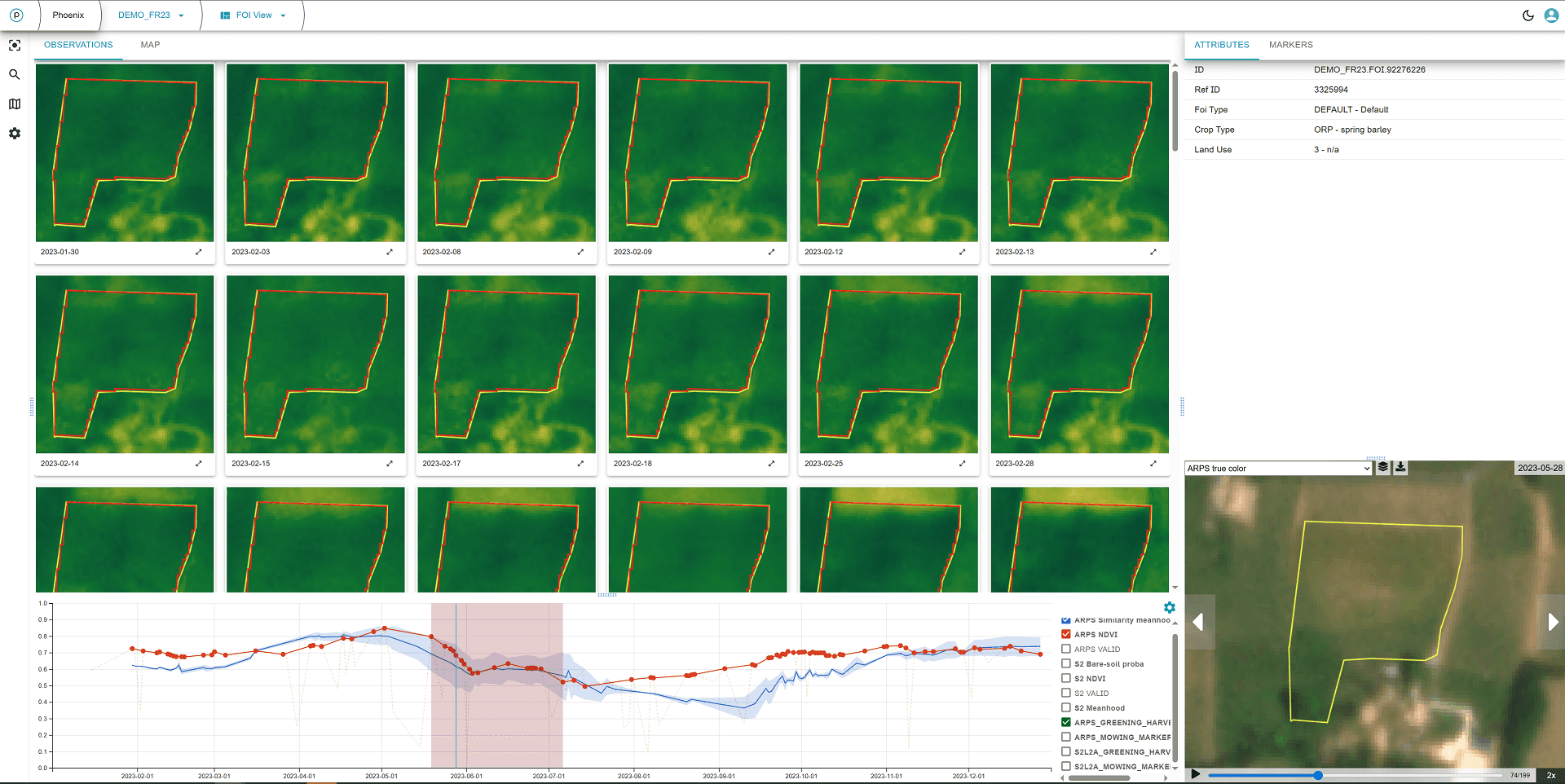
FOI = 92276226 had a spring barley (Hordeum vulgare L.) claim for the main crop. The NDVI time series indicates development of the main crop early in spring and harvest in mid-summer.
Key observations:
- Greening phase detected early in spring
- Harvest detected in mid-summer as expected for spring barley
- No bare soil detected after harvest
- The absence of bare soil after harvest indicates that a second crop might have been undersown
Technical interpretation: The continuous vegetation cover suggests that the second crop was planted before or shortly after the main crop harvest, maintaining soil coverage throughout the growing season.
Link
Gradual NDVI decline during harvest period
Description
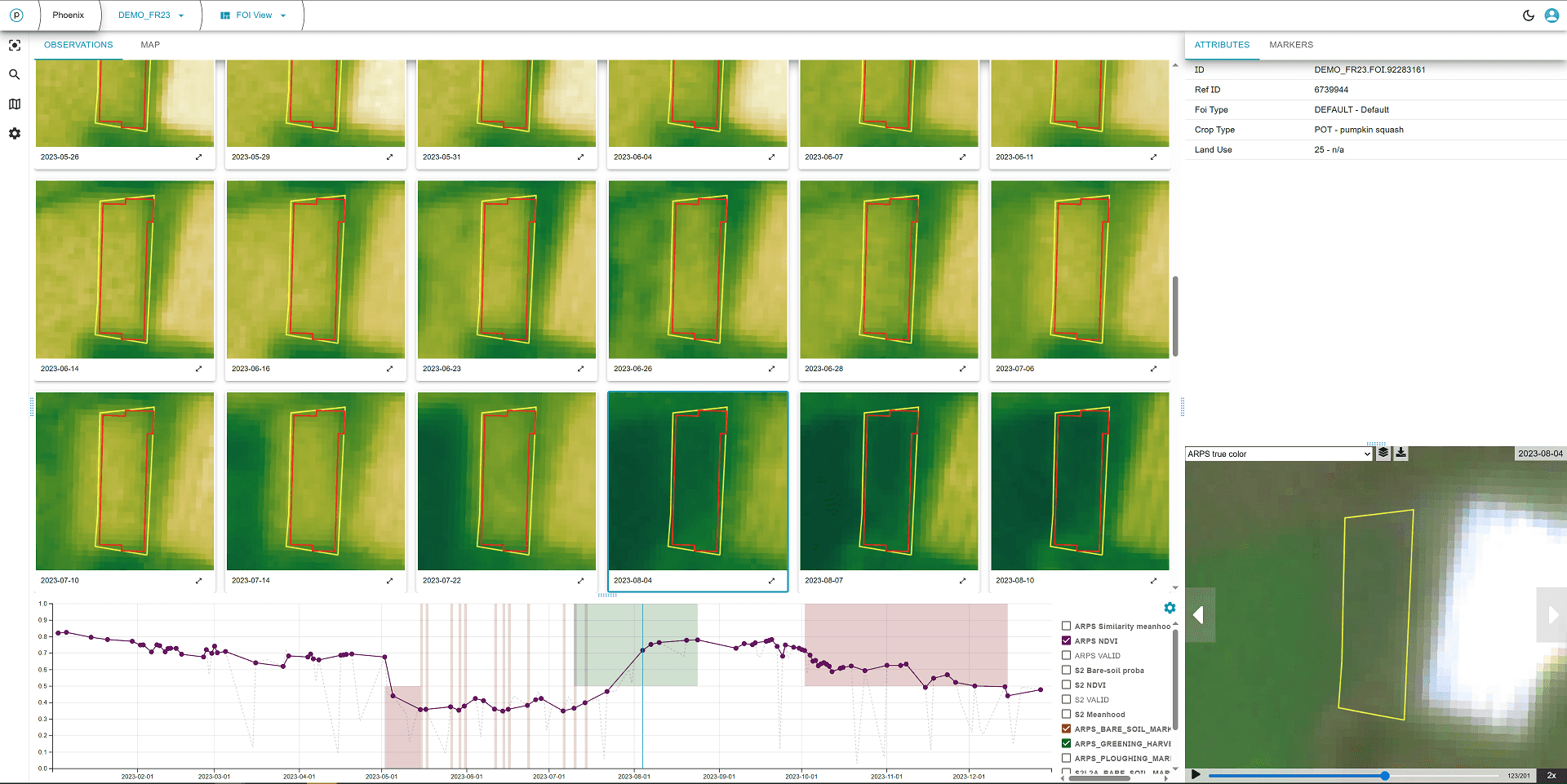
FOI = 92283161 had a summer squash (Cucurbita pepo) claim. The Signal component shows bare soil observations before and at the beginning of the greening phase. The harvest phase was detected in early autumn, as expected for this crop.
Key observations:
- Bare soil detected before and at the beginning of the greening phase
- Harvest phase detected in early autumn (appropriate timing for summer squash)
- Gradual NDVI decline during harvest period
Technical interpretation: During the harvest period, the NDVI decline was gradual, which could indicate that crop residues after harvest were left in the field to dry out rather than being immediately removed. This pattern is typical when harvest operations are spread over time or when plant material is allowed to desiccate naturally.